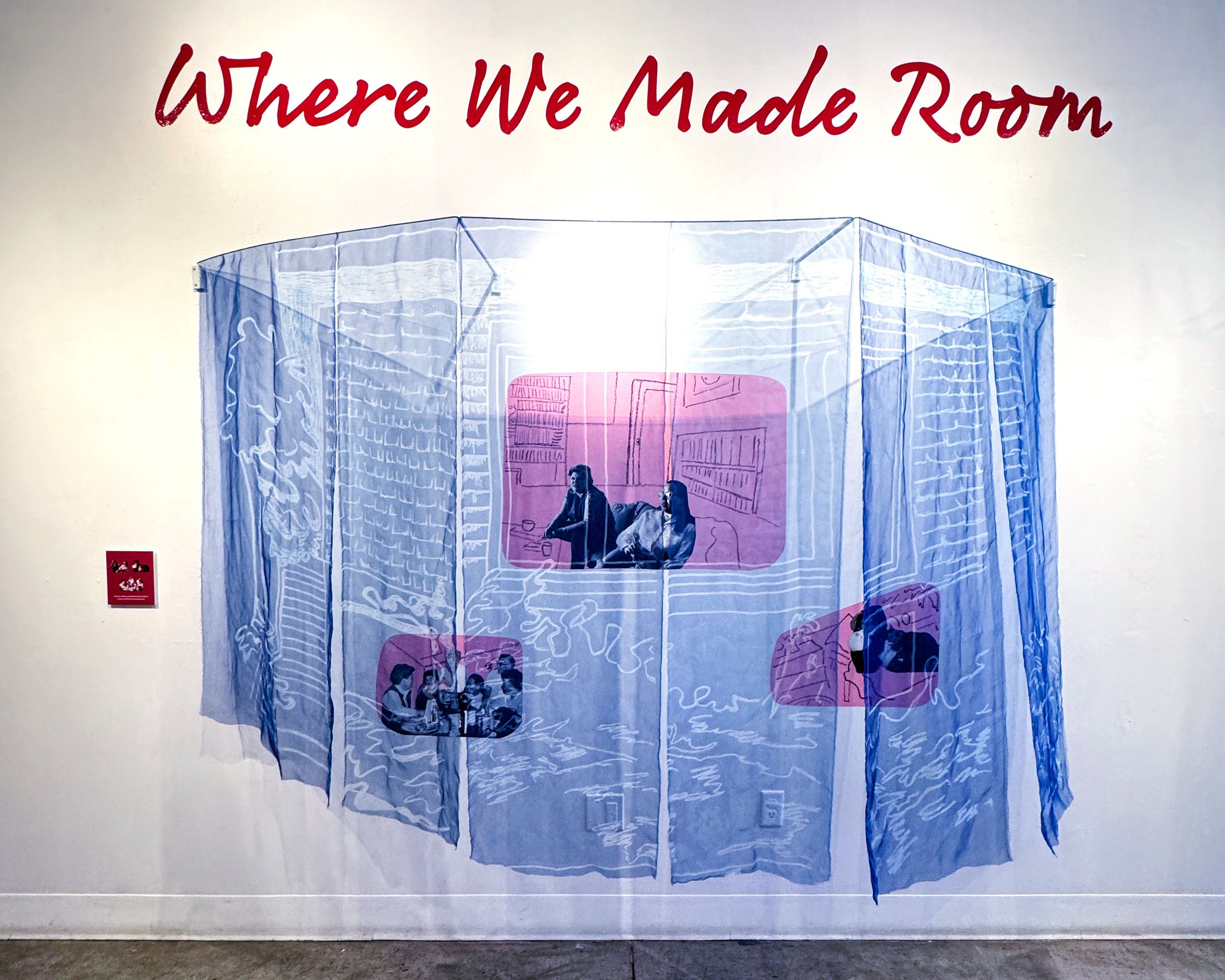
Where We Made Room
Solo Exhibition
GLBT Historical Society Museum, San Francisco
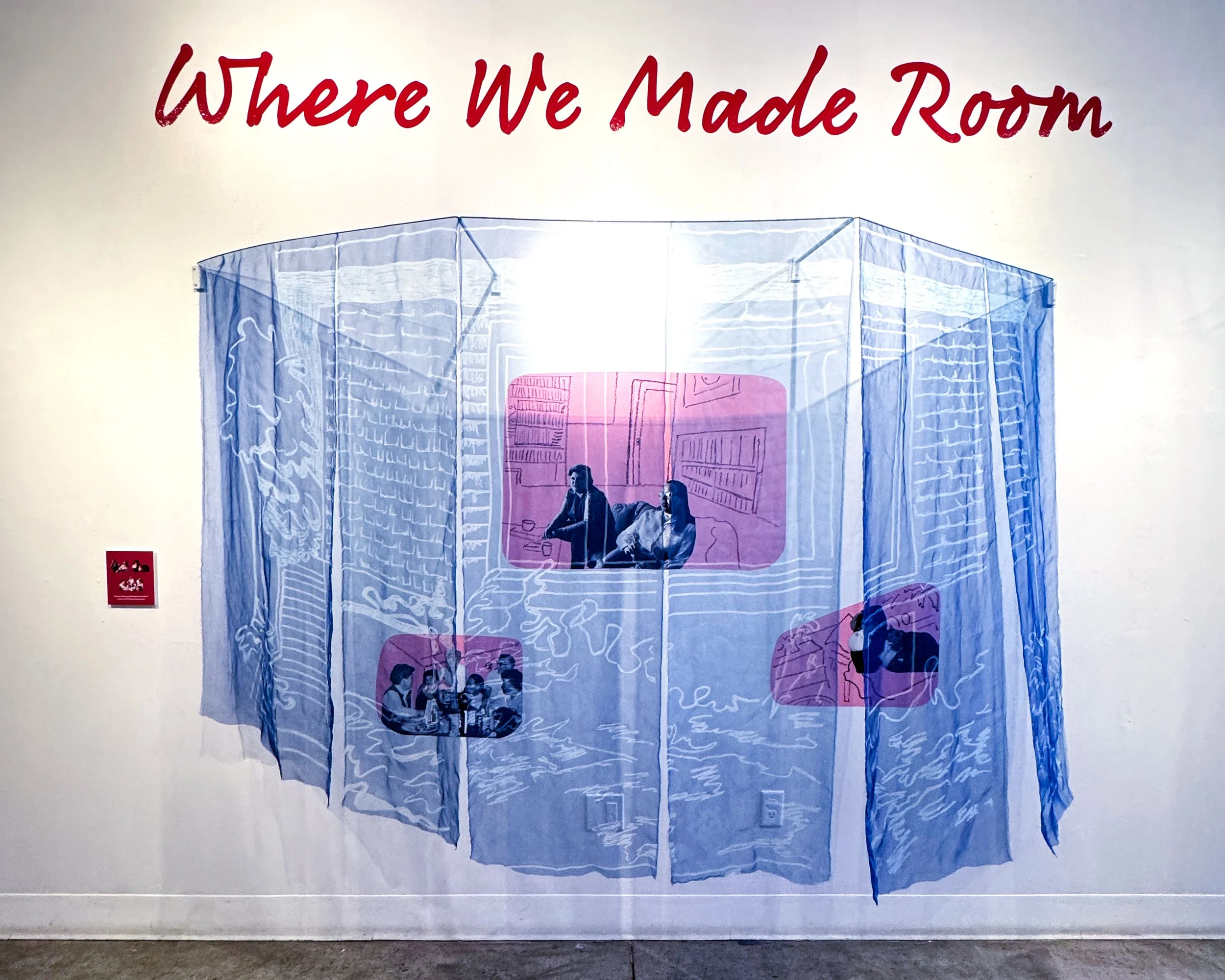
Where We Made Room is a solo exhibition and archival installation exploring the queer and trans home as a space that must be carved out, collectively imagined, and fought for.
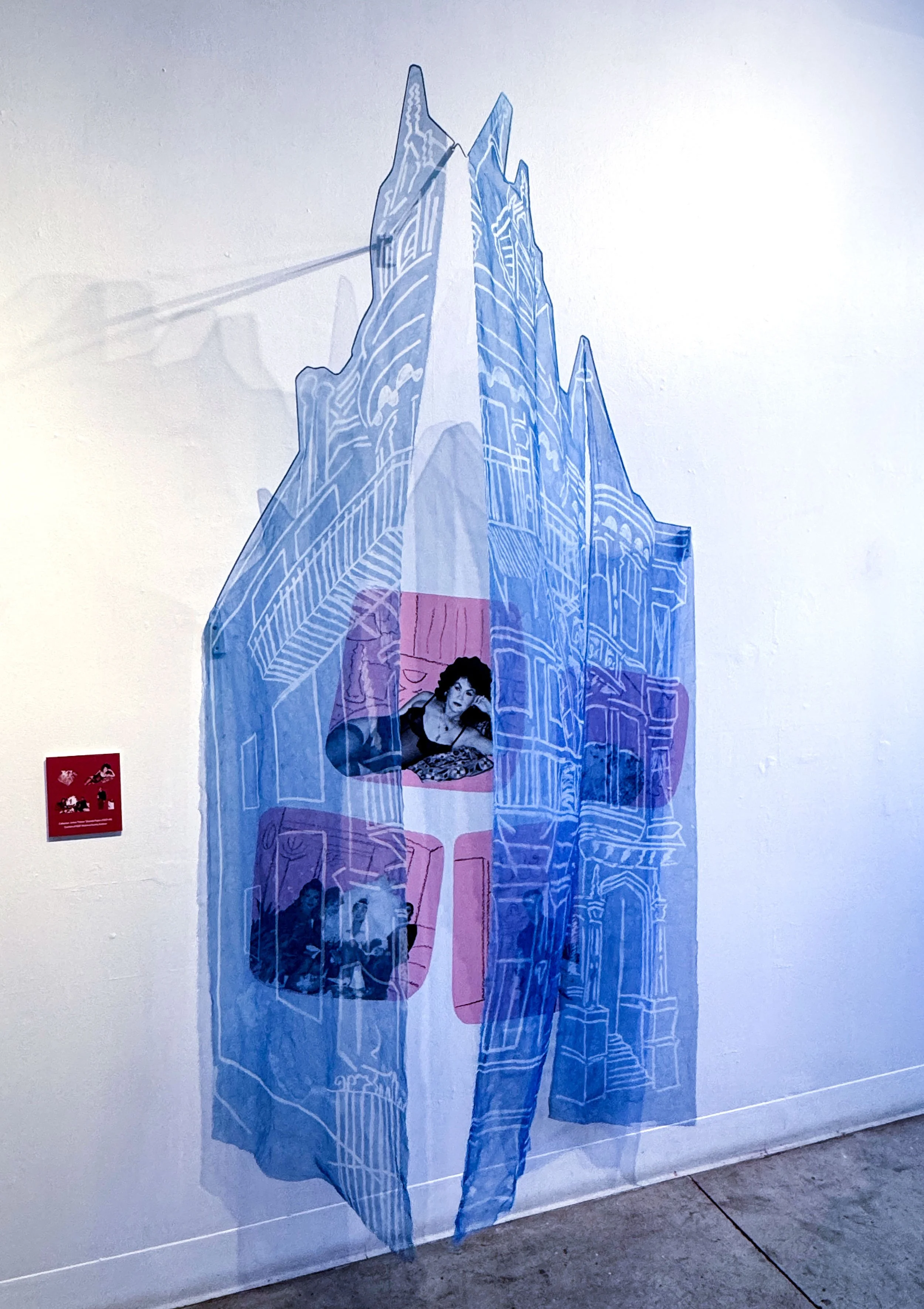
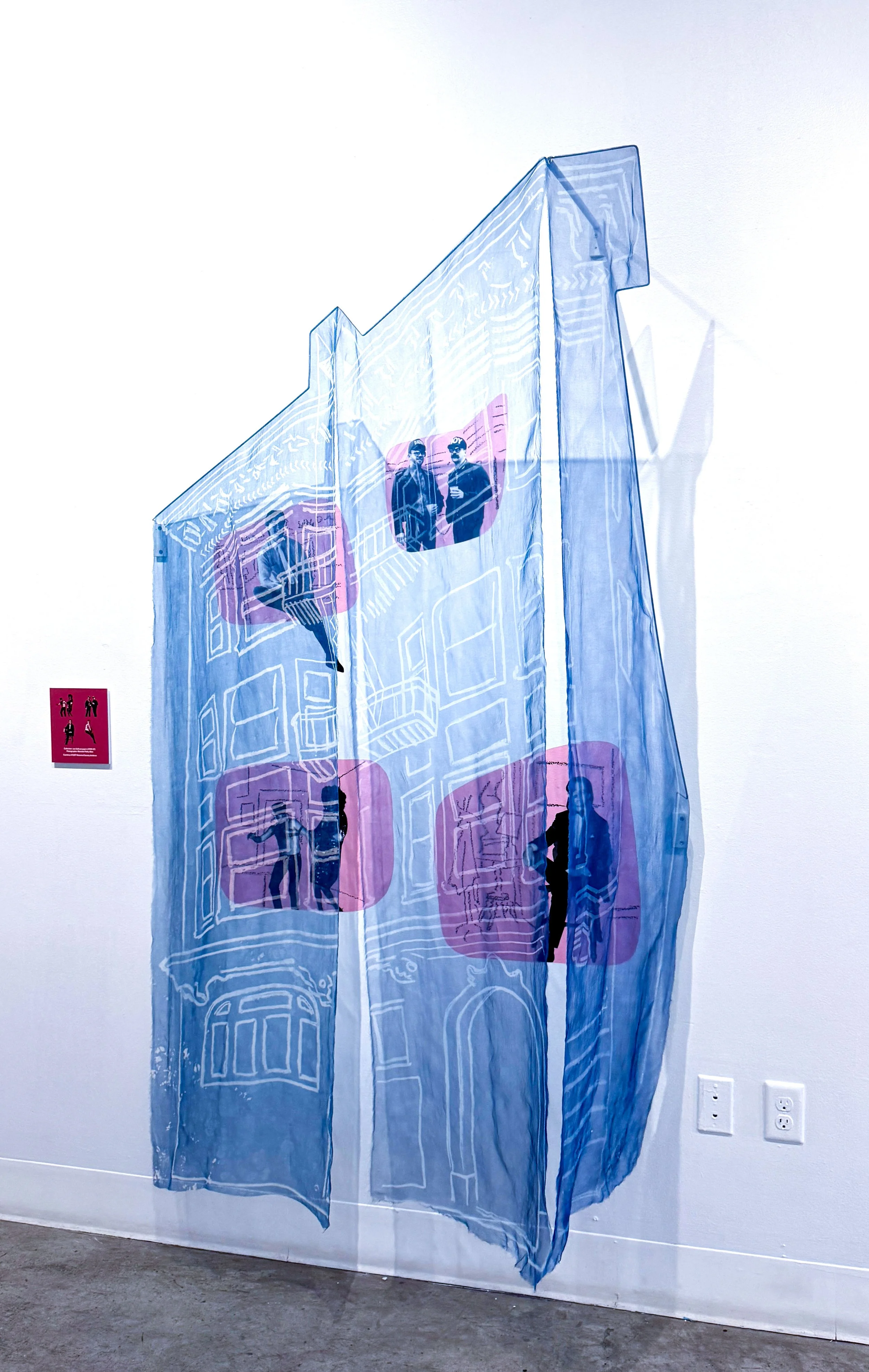
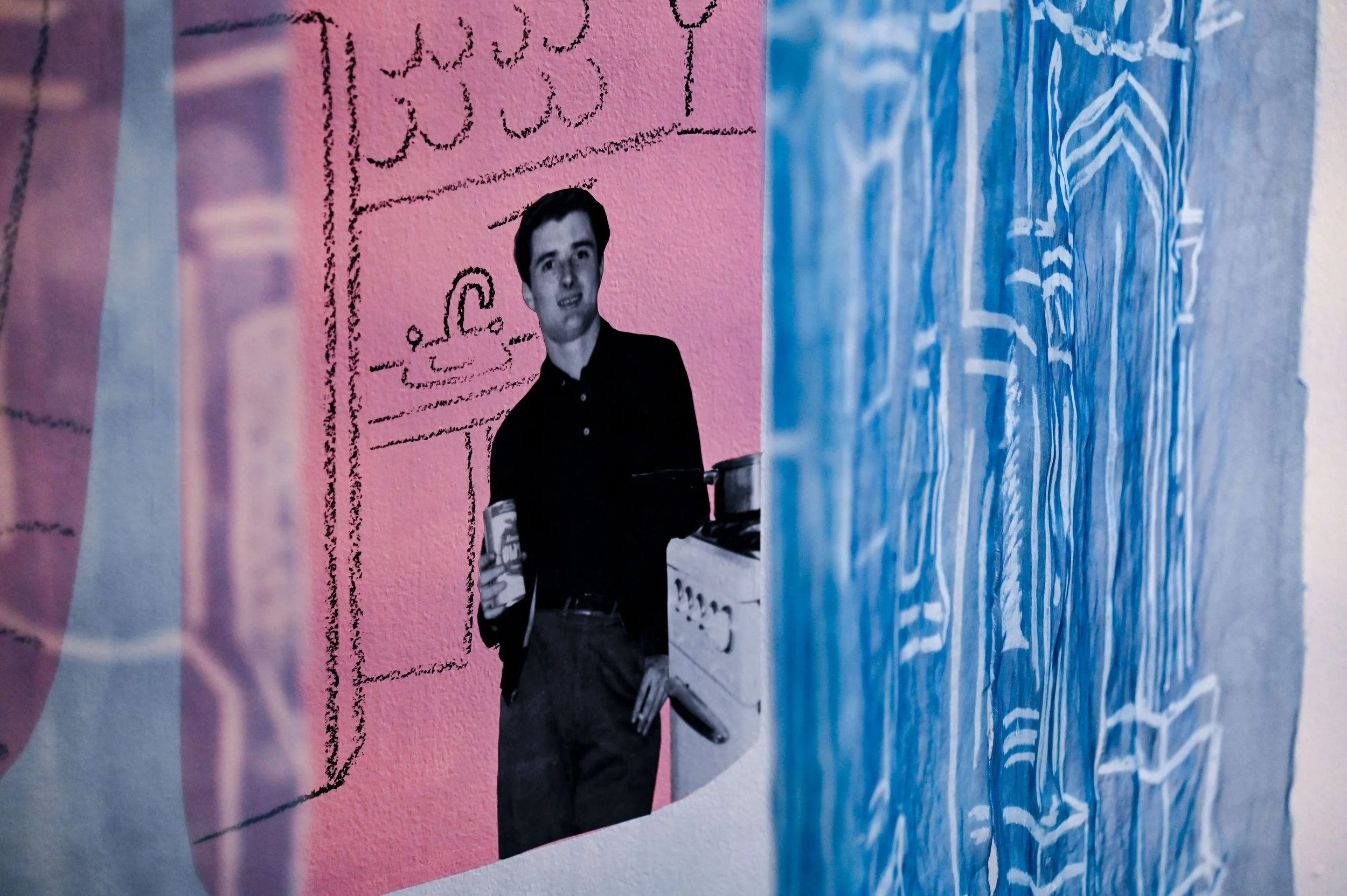
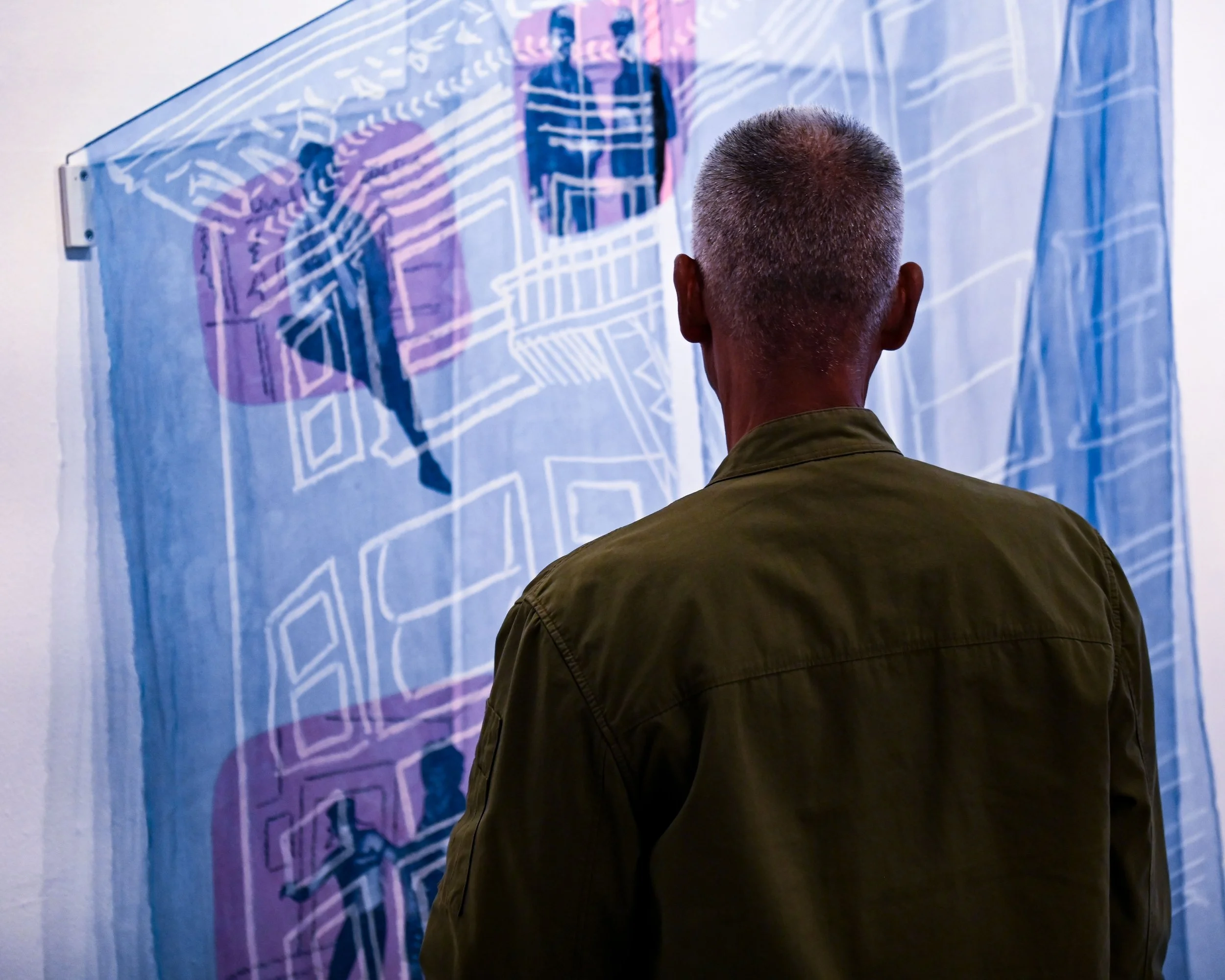
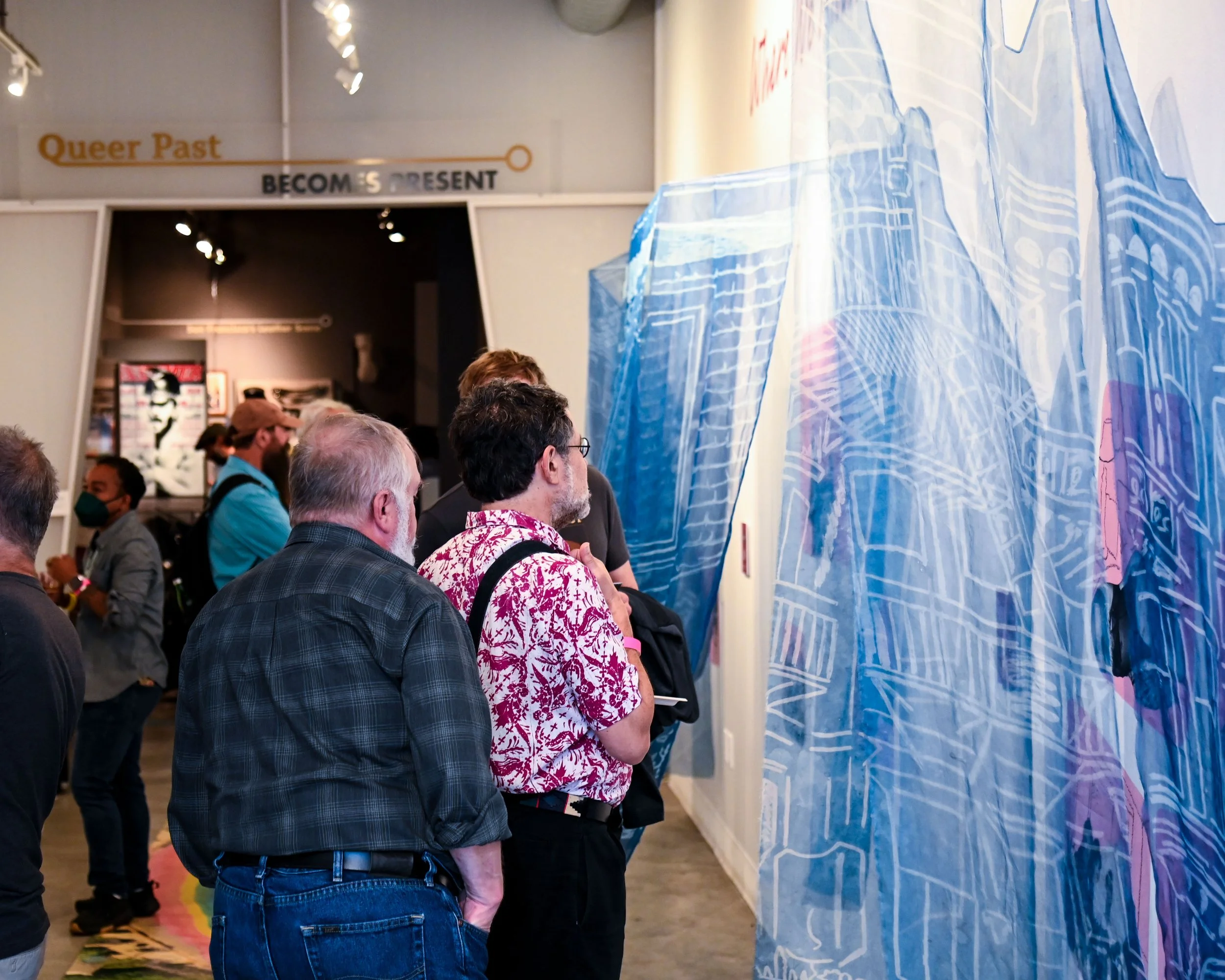
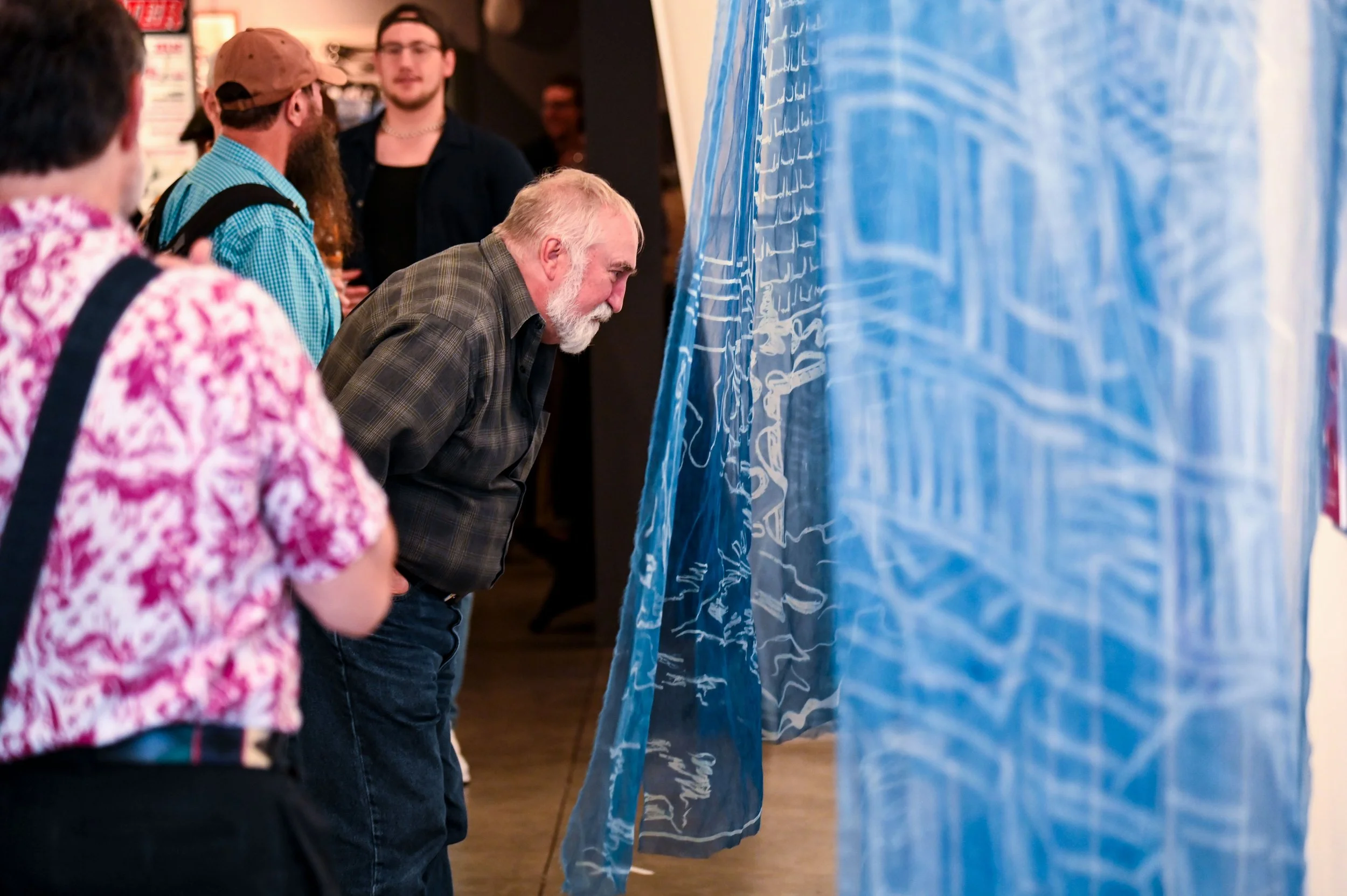
Working with the GLBT Historical Society Archives, Aleo’s installation presents large-scale cyanotypes on silk that blur the line between document and dream. The silks layer archival exteriors with hand-drawn, imagined interiors based on the homes of Bay Area queer and trans elders: Lou Sullivan, Phyllis Lyon and Del Martin, and Victoria Fernandez (aka Vicki Starr).
Bridging past and present, Where We Made Room holds that while housing insecurity has always been part of queer and trans life, it has never stopped people from finding other ways to build home, whether in unconventional structures, found spaces, or within community.
Making something out of nothing is a skill queer people have always had.
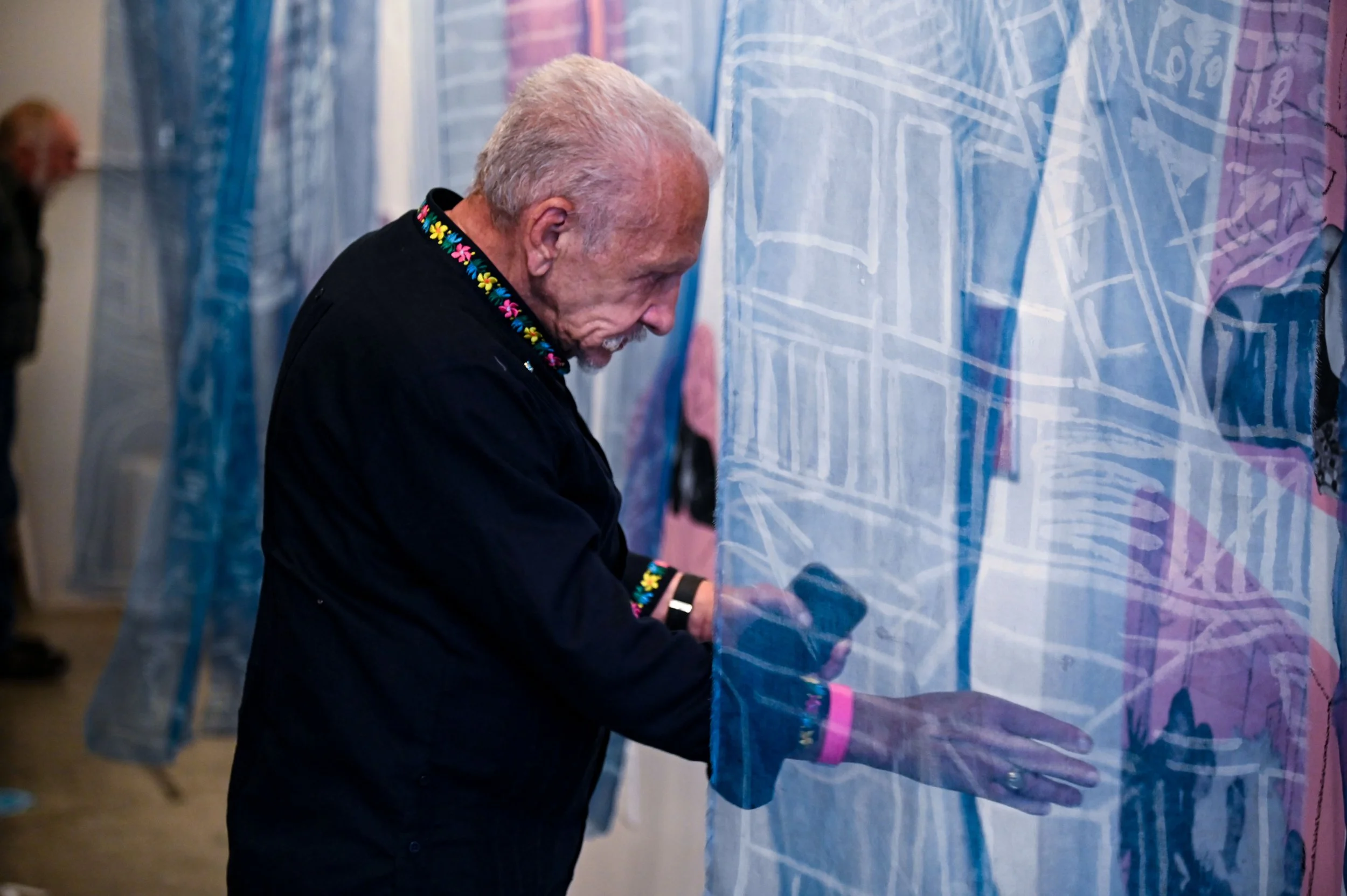
This new exhibition brings together archival images of domestic life, personal photographs, original drawings, and a listening station where visitors can record their own memories of home, creating a living archive that treats intergenerational memory as a form of resistance.
Where We Made Room asserts that this history is not finished. These rooms are still being built.The cyanotype process itself holds particular resonance for this work. Born from the intersection of science and art, this photographic technique creates blueprints in the truest sense—documents that map presence and absence, light and shadow. The distinctive blue that emerges speaks to both melancholy and possibility, echoing the complex emotional landscapes that queer and trans bodies navigate daily.
Through this somatic approach to mark-making, the artist explores how gesture can function as a form of queer record-keeping. Each drawing captures not just the physical trace of movement, but the accumulated weight of collective memory—the histories of LGBTQI+ struggle, violence, and empowerment that live within queer and trans bodies. The translation from charcoal to cyanotype creates a layered dialogue between the immediacy of bodily experience and the permanence of historical record.
These works center queer joy as liberation while acknowledging the systems of power that continue to shape and constrain queer and trans existence. In the space between dance and documentation, between movement and memory, these pieces offer both witness and celebration—blueprints for bodies that refuse to be contained, that insist on their own complex humanity, and that carry within them the revolutionary potential of simply being.